
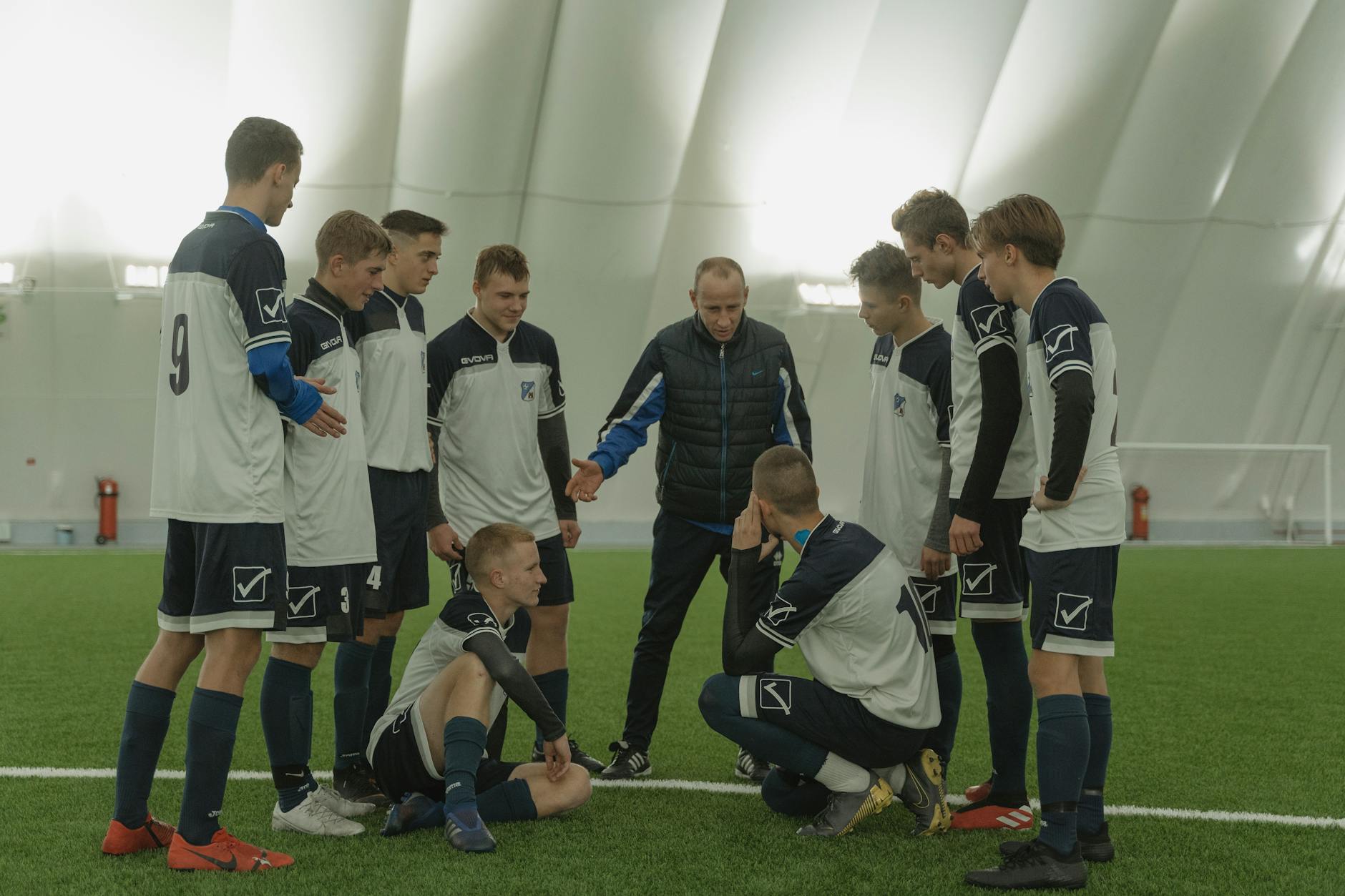
What you say and how you say it shapes the kind of athlete standing in front of you. These five principles from sport psychology can help you build competitors who are confident, creative, and genuinely love the game.
Tip #1 – Don’t demonstrate and talk at the same time
The brain is not built for two streams of complex information at once. When a coach demonstrates a skill while simultaneously explaining it, athletes face a multimodal processing overload. Their visual and auditory systems compete for the same limited working memory. The result is that neither the image nor the words land as clearly as they should, and retention suffers for both.
Research in cognitive load theory is consistent on this point: separating your visual and verbal delivery dramatically improves how much athletes absorb and how quickly they can apply it. A simple approach is to demonstrate first in silence, letting athletes build a mental model of what they are watching. Then step back, pause, and explain. Give the brain a moment to process one channel before opening the next.
A useful alternative is to have an athlete demonstrate while you narrate. This separates the visual source from the verbal source, reducing the sensory conflict and keeping your athletes’ attention organized. Whether you demo silently then speak, or use a peer demonstrator while you coach, the principle is the same: one thing at a time. You will be surprised how much more athletes absorb, and how fewer repetitions it takes to get there.
Tip #2 – Collaborate with athletes, don’t just direct them
When athletes feel like they have a voice in their own development, everything changes. Self-determination theory tells us that autonomy, the sense that your choices matter, is one of the most powerful drivers of intrinsic motivation and sustained effort. Coaches who collaborate rather than command tap directly into this.
This does not mean relinquishing structure. It means asking rather than always telling. Questions like “What did you feel on that play?” or “What do you think you need to work on this week?” are small invitations that carry outsized weight. They signal to the athlete that their perspective is valued, which creates investment in the outcome. Athletes who feel ownership over their development show up differently. They push harder, reflect more honestly, and persist longer through difficulty.
The psychological benefit extends beyond motivation. Collaborative coaching builds self-efficacy, the belief that an athlete is capable of improving and succeeding. And self-efficacy is one of the strongest predictors of athletic performance under pressure. When an athlete has had a hand in building their own plan, they trust it more when it counts.
Tip #3 – Compare athletes to their past selves, not each other
“Look how far you have come” lands very differently than “look how far behind you are.” When coaches habitually measure athletes against one another, they activate negative social comparison, a well-documented confidence killer that shifts focus from growth to status. Athletes stop asking “Am I getting better?” and start asking “Am I good enough?” That is a costly mental shift, especially for developing athletes who are still building their identity in the sport.
The antidote is a mastery orientation: measuring success by personal progress rather than peer ranking. Phrases like “That is the cleanest rep you have hit this month” or “Remember where you were six weeks ago?” direct attention inward. They anchor confidence in something real and within the athlete’s control, rather than in a comparison that can be disrupted by one bad day or one stronger teammate.
This approach also creates a psychologically safer environment. When athletes know that their improvement, not their ranking, is what gets recognized, they become more willing to try hard things. Risk-taking increases. Creativity returns. And the coach gets better data on what is actually working because athletes are honest about where they are struggling, rather than trying to look good relative to the person next to them.
Tip #4 – Let them play
Over-coaching is one of the quietest killers of athletic potential. When athletes receive a constant stream of corrections, every movement becomes a question mark. They slow down. They second-guess. They become so focused on not making mistakes that they stop being athletic, and they stop being creative. Over-structured practice produces technically rigid athletes who are, beneath the surface, burning out. They show up because they have to, not because they want to. And eventually, many stop showing up at all.
Sport psychology research is consistent on this: excessive instruction creates performance anxiety and erodes an athlete’s ability to trust the automatic processes that training is supposed to build. Unstructured time, whether that is a scrimmage, athlete-directed drills, or simply time where no clipboard is in sight, is not wasted practice. It is where athletes rediscover why they fell in love with the sport. It rebuilds intrinsic motivation and restores enjoyment and satisfaction, the two most reliable predictors of long-term athletic engagement.
Coaches who learn to hold back, who let a drill run its course before jumping in, who allow failure as a natural part of the learning loop, produce athletes who are decisive, adaptable, and composed when it matters most. Let them play. Let them figure things out. Let them fail and come back. That is not a break from development. That is where real development lives.
Tip #5 – Invest in team building
Team building is not a rainy-day activity or a preseason formality. The best coaches in the world treat it as a genuine performance tool, because the research backs them up. Teams that are genuinely close, where athletes trust and care about one another, consistently outperform those that are not. That connection is not just a nice thing to have. It is a competitive advantage.
The mechanism behind this is psychological safety, a term coined by researcher Amy Edmondson to describe environments where people feel safe enough to take risks, speak up, and make mistakes without fear of embarrassment or punishment. In sport, psychological safety unlocks performance that structured practice alone cannot reach. An athlete who trusts their teammates will take a shot they are not sure about. They will try a new move in a high-stakes moment. They will be honest when something is not working. All of those behaviors require trust, and trust is built through relationship.
Great coaches create deliberate opportunities for that trust to form. This does not require elaborate retreats or manufactured bonding exercises. It can be as simple as consistent team meals, shared rituals, open conversations about what the team values, or activities that put athletes in new contexts together. What matters is that the coach signals, through time and attention, that the relationships on this team matter. When athletes feel genuinely connected to the people beside them, they play with more freedom, more courage, and more consistency. The team becomes the environment that makes every other coaching investment pay off.
Put all five of these principles into consistent practice and a portrait emerges, not just of a better performer, but of a more complete person. An athlete who listens with intent because their coach has learned to speak with purpose. Who takes ownership of their development because they have been trusted to. Who measures growth against yesterday’s version of themselves, and keeps showing up because that measuring stick always leaves room for more. An athlete who is bold and decisive on the field, not paralyzed by the fear of getting it wrong, because failure has been reframed as part of the process rather than a verdict on their worth. Someone who plays freely and with joy, not because the pressure is gone, but because they trust the people around them enough to take risks. That is what psychological safety, autonomy, mastery, and connection produce together. A competitor who is coachable, creative, resilient, and genuinely in love with what they do. That is the athlete great coaching builds.
Questions about these tips? Let’s talk.
The Mental Barbell offers a free 30-minute consultation for coaches who want to apply sport psychology principles to their program. Whether you are a youth coach, a high school varsity staff, or a collegiate program, we will meet you where you are.
Book your free 30-min consultation today!
Leave a Reply